


Close the season now to start the next one without surprises
|
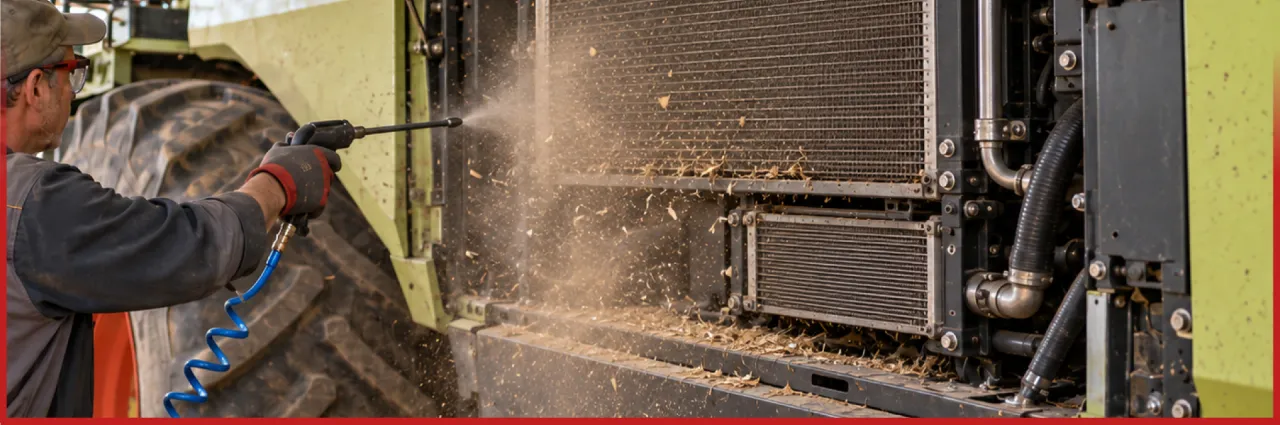
Next year's harvest starts now Anyone who works with a combine harvester knows that the season does not end with the last load of grain, nor does it begin in June. The groundwork is laid during these autumn days, in the shed, with the machine still full of straw, chaff and dust. This is when every machine tells the story of the season: a bearing that has started to overheat, a chain that has stretched, a knife that no longer cuts as it should. In July, when the wheat is ripe and the weather will not wait, these warning signs turn into machine downtime. In November, they are still just another line on a quotation. There is another aspect that is often overlooked: cleaning is not just about appearance. Plant residues and dust retain moisture, and a shed closed for months can turn that moisture into corrosion, mould and an invitation to rodents, which find wiring an ideal material to chew on. A combine harvester put away dirty is not really resting: it is slowly deteriorating, and the cost becomes apparent the first time it is started up again. Proper winter storage is ultimately a matter of good planning. Those who tackle it at the beginning of winter have time to check components, order spare parts and compare options without the pressure of an approaching deadline. Those who put it off until spring end up searching for parts just as fieldwork is about to begin. Cleaning: where problems hide Cleaning a combine harvester starts with compressed air, not water. First, remove the bulk of the debris with compressed air and brushes, using low-pressure washing only where necessary. Avoid directing water jets at bearings, connectors, control units and sensors: water can penetrate seals and remain trapped throughout the winter. The areas where residue tends to accumulate unnoticed are almost always the same:
Once the machine has been cleaned, allow it to dry completely before greasing it and covering it. Cleaning is also the best time to inspect the machine: with the straw removed, abnormal play, signs of overheating, uneven wear and leaks that may have gone unnoticed during the season become easier to spot. Make a note of everything straight away, ideally with a photo, because by January nobody will remember what they noticed in October. Winter storage: checks to carry out before closing the shed Once the machine is clean, it is time to prepare it for storage. The manufacturer's manual should always be your main reference, but here is a basic checklist:
If you noticed any parts approaching the end of their service life during cleaning and inspection, now is the time to add them to your list. Ordering a spare part in November costs less in both time and stress than trying to find one in June. Wear parts to replace before winter storage Putting a properly serviced machine away means being able to focus on one thing when the next season arrives: starting up and getting to work. Wear parts are often the first components to cause problems, which is why it makes sense to replace them now, while the machine is out of service and there is time to do the job properly, rather than trying to source them at the end of spring. These are the components most commonly found on the checklist when the harvest season comes to an end:
At Agri Parts Italy, you can find spare parts for combine harvesters from leading manufacturers, including Claas and New Holland. You can find the right part by selecting the machine's make, type and model. Our wear parts are compatible alternatives to original components, designed to provide reliability at a more competitive price. Ordering now means having the parts ready before winter, fitting them without rushing and reducing the risk of unexpected problems when the machine returns to the field. A combine harvester put away with its wear parts already replaced is ready to get to work on the first available day of the next season. Start by browsing our spare parts catalogue. About us: Agri Parts Italy Agri Parts is an Italian company that has been operating in the market since the 1980s, based in Villanova di Castenaso, near Bologna. It manufactures and distributes spare parts for combine harvesters, forage harvesters and tractors, with a dedicated range for balers. Its products are fully compatible with those supplied by manufacturers such as Claas, New Holland, Case, John Deere, Laverda, Massey Ferguson, Fendt, Challenger, MacDon, Olimac and Kemper. APB (Agri Parts Bologna) branded components are developed through rigorous material selection and continuous production process monitoring. Our catalogue includes over 10,000 product references, managed by our logistics centre with an automated vertical storage system. Alongside APB products, we also supply components from official distributors and leading brands such as Donaldson, Hifi Filters, Gates, Harvest Power, SKF, NTN, NSK and Timken. We're here to help Not sure which spare part you need? Get in touch: we'll help you find the right component for your machine and finish the season with peace of mind.
|